Australians have never spent more on clothing online, yet a growing share of that money is leaving the country through overseas marketplaces. This is a practical playbook for Australian fashion founders, owners and marketing leads who know their online store should be doing more, and want to know exactly where to start: the website, search, AI answers, social commerce and paid media.
At a glance
- The market is growing, but not for everyone. Australians spent $11.6 billion on fashion and apparel online in 2025 (Australia Post, via Ragtrader). Yet in the June 2026 quarter, online fashion grew just 9%, the slowest of any category, while online marketplaces grew 17% and accounted for 42% of online purchases (Australia Post, via Ragtrader).
- The overseas platforms are still gaining ground. 5 million Australians bought from Temu in 2025 and 2.9 million from Shein, up 17% and 28% respectively on the year before (Roy Morgan, March 2026).
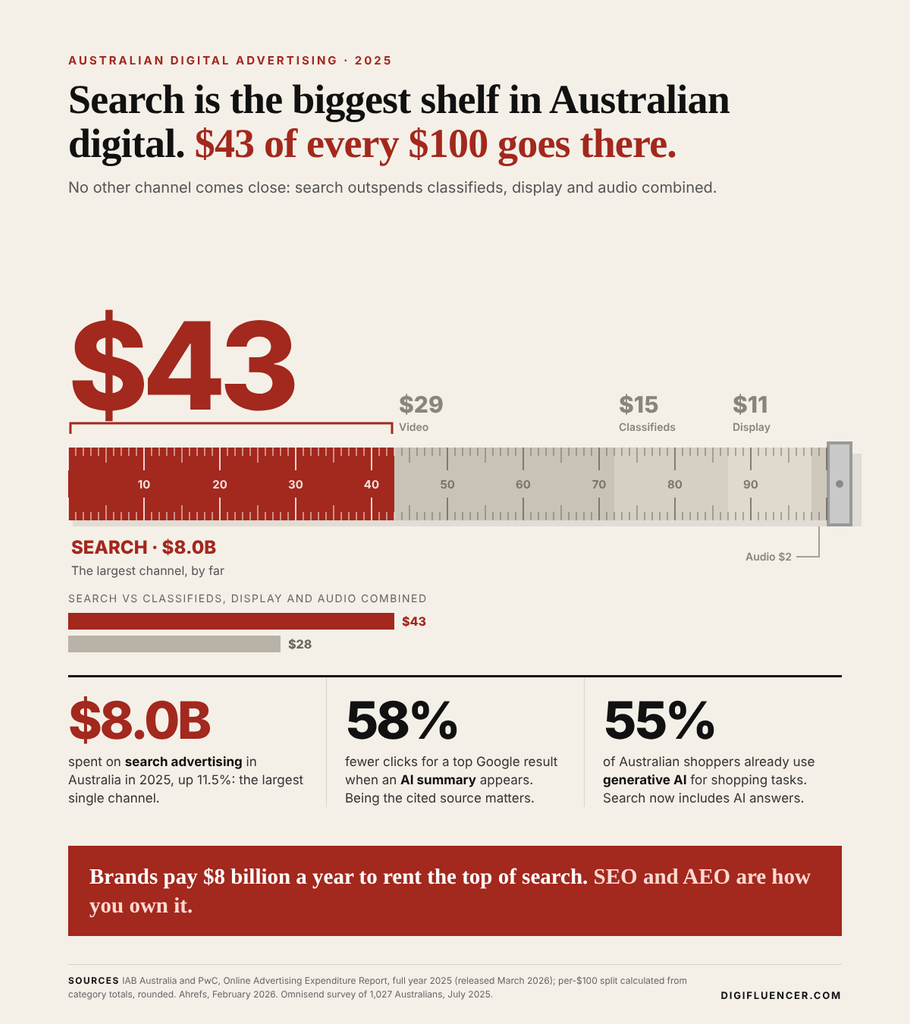
- How shoppers find clothing has changed. 60% of Australian shoppers use social media to discover products, and 6 in 10 Australians already use AI (Australia Post eCommerce Report 2026). Where a top Google result once guaranteed traffic, AI summaries now cut its clicks by an average of 58% (Ahrefs, 2026).
- Our guidance: Australian fashion retailers cannot win on price against the global giants, and should not try. They can win on speed, fit, trust, local relevance and community, but only if their digital foundations make those strengths visible. We set out five growth pillars, a 90-day plan, and a 15-minute self-assessment any owner can run.
The squeeze nobody budgeted for
Consider an independent womenswear label in Melbourne. It has a loyal customer base, a well-photographed Shopify store and a steady Instagram following. For five years, online sales grew without much effort. Then, over eighteen months, growth stalled. Paid social became more expensive for the same results. Organic search traffic fell even though rankings looked unchanged. The founders assumed the market had softened.
It had not. Australians were still buying clothing online, in record numbers. They were simply finding it in different places: on marketplace apps, in short-form video, in AI-generated answers and in Google’s shopping results, none of which the label had invested in. The scenario is a composite, but every element of it reflects patterns we see across Australian fashion retail today.
The numbers explain why. In 2025, Australians spent a record $82.6 billion online, up 14% on the year before, across 9.8 million households (Australia Post eCommerce Report 2026). Fashion is the third-largest online category. But growth is not being shared evenly:
| Q2 2026 (April to June) | Online spend | Year-on-year growth |
|---|---|---|
| Online marketplaces | $5.1 billion | +17% |
| All online retail | $21.9 billion | +14% |
| Fashion and apparel | $3.1 billion | +9% (slowest category) |
Source: Australia Post Quarterly eCommerce Report, Q2 2026, via Ragtrader.
Meanwhile, the global platforms keep adding Australian customers. Roy Morgan estimates that Temu reached 5 million Australian shoppers and Shein 2.9 million in 2025, with Amazon adding a further 500,000 (Roy Morgan). Shein’s local entity reported $1.2 billion in Australian sales for 2024, up 25% (The Nightly). Earlier Roy Morgan analysis found that 78% of Shein’s Australian shoppers are women and almost half are under 35 (Ragtrader): precisely the customer many Australian labels are built around.
The uncomfortable conclusion is this: the biggest threat to most Australian fashion retailers is not that customers have stopped buying online. It is that they are buying from businesses that are better at being found.
Why “we’ll get to it” has become the expensive option
Many Australian fashion businesses still treat digital as a cost to be contained rather than the engine of the business. The website was built once, SEO was “done” at launch, and marketing means posting on Instagram and boosting the occasional post. That approach worked when the market was growing fast enough to lift everyone. It no longer does, for three reasons.
1. Customers spread their spending more thinly. The average Australian household now buys from 16 different online brands a year, makes more purchases, and spends less each time: the average basket is $96, around $10 lower than in 2020 (Australia Post). Loyalty has to be earned on every visit, and smaller baskets make every wasted advertising dollar more painful.
2. Discovery has moved. A decade ago, the path to purchase was largely a Google search and a click. Today it starts in a TikTok video, an Instagram Reel, a marketplace app or a question typed into ChatGPT. Brands that only exist on their own website and one social channel are simply absent from much of the journey.
3. The gap compounds. Search visibility, reviews, content, customer data and email lists all grow in value over time. A competitor that started building them two years ago is not two years ahead. In practical terms, they are often several times more visible, and the gap widens every month nobody acts.
The five pillars of online growth for Australian fashion
Growth online rests on five connected pillars. Each one matters, but the order matters too: there is little point paying to send traffic to a store that does not convert it.

Pillar 1: The store. Your website is your flagship, not a catalogue
For most Australian fashion brands, the website is the only channel where they own the customer relationship, the data and the margin. It deserves the same care as a flagship store on Chapel Street or Pitt Street.
What good looks like in 2027:
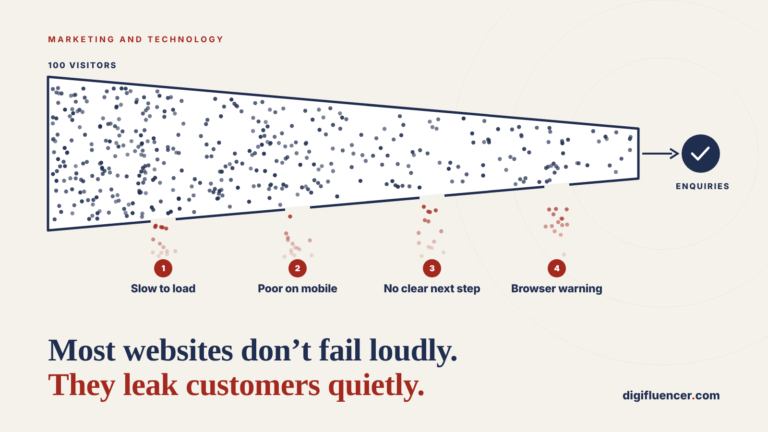
- Fast on a mid-range phone, over 4G. Fashion shoppers browse on mobile, often in short bursts. Google and Deloitte research found that a 0.1-second improvement in mobile speed lifted retail conversions by 8.4% (web.dev). Heavy hero videos, oversized product images and a dozen apps loaded on every page are the usual culprits.
- Fit confidence on every product page. Size is the single biggest source of hesitation and returns in clothing. Clear size charts in Australian sizing, model measurements (“Jess is 172cm and wears a size 10”), fit notes, and reviews that mention fit all lift conversion and reduce returns.
- Australian delivery and returns, stated plainly. 73% of shoppers say a good delivery experience makes them more likely to shop online, and 69% want a range of delivery options at checkout (Australia Post). Show the delivery estimate by postcode, the free-shipping threshold in AUD, and the returns policy on the product page, not buried in the footer.
- A frictionless checkout. Express wallets (Apple Pay, Google Pay, Shop Pay), the buy now, pay later options Australian shoppers expect, and guest checkout. Australia leads the world in one-click checkout: 35% of Australian shoppers used it for their latest online purchase, more than twice the global rate (PYMNTS and Visa, 2025).
- Features that act like an application, not a brochure. Wishlists, back-in-stock alerts, “complete the look” recommendations, store stock lookup and loyalty accounts. This is where web applications earn their keep: they turn browsers into returning customers.
Quick win: run your three best-selling product pages through PageSpeed Insights on mobile, and buy something from your own store on your phone. Time it.
(For the warning signs of a site that leaks sales, see 7 Signs Your Website Is Quietly Costing You Customers.)
Pillar 2: Search. Be found when Australians are ready to buy
Search remains the channel with the highest buying intent. Someone typing “linen pants women Australia” or “black midi dress for wedding guest” is close to a purchase. If your products do not appear, a marketplace’s will.
What good looks like:
- Collection pages built around how Australians search. Most fashion stores name collections creatively (“The Byron Edit”) rather than descriptively. Keep the creative name, but make sure there are well-written, indexable collection pages for the terms people actually type: product type, occasion, fabric, fit and style.
- Product pages with unique copy. Supplier descriptions copied across hundreds of stores give Google no reason to rank yours. Write for the customer: fabric, fit, how to wear it and how to care for it.
- Google Merchant Center and free listings. Products listed in Google Merchant Center can appear in the Shopping tab and product panels at no cost. Many small Australian retailers have never set it up.
- Local search for physical stores. If you have a boutique, a complete Google Business Profile with photos, opening hours and reviews puts you in front of shoppers searching “near me”.
- Technical hygiene. Out-of-stock and seasonal products handled properly, no duplicate pages from filters, and clean site structure. Fashion catalogues change constantly, so this needs ongoing attention, not a one-off fix.
Quick win: in Google Search Console, find queries where you appear on page one or two but get few clicks. Those are your fastest opportunities.
Our complete guide to SEO sets out the four pillars of search visibility in more depth.
Pillar 3: AI answers. Be the brand that ChatGPT and Google recommend
This is the pillar most Australian retailers have not yet considered, and the one with the largest first-mover advantage.
Australians are already shopping with AI. In a survey of more than 1,000 Australian consumers, 55% said they use generative AI tools for shopping tasks, most commonly for product research (Omnisend, 2025). A separate 2026 study of 1,736 Australians found 39% use AI to help make buying decisions, and among them 80% use it to compare brands (The Navigators, via Inside Retail). Google’s AI Mode has been live in Australia since October 2025 (Pickr), and Australia Post expects AI to influence up to 30% of eCommerce transactions by 2030 (Australia Post).
When a shopper asks “What are the best Australian brands for sustainable linen workwear?”, the AI does not show ten blue links. It names a handful of brands. Answer engine optimisation (AEO) is the discipline of making sure yours is one of them.
What good looks like:
- Structured product data. Use schema markup for products, prices in AUD, availability, reviews, shipping and returns, and keep product feeds accurate. AI systems and Google’s shopping surfaces read this data directly.
- Clear answers to real questions. Size guides, fabric guides, care instructions and FAQs written in plain language (“Does this run small?”, “Is it made in Australia?”, “How long does delivery to Perth take?”). AI assistants quote content that answers questions directly.
- Proof that you are what you say you are. If you make claims about being Australian-made, ethically produced or sustainable, back them with specifics on your site: where, by whom, from what. The ACCC actively pursues misleading environmental claims, and AI systems tend to favour sources that are specific and consistent.
- Mentions beyond your own site. AI answers draw heavily on third-party sources: Australian fashion media, gift guides, review sites, Reddit threads and marketplaces. Earning coverage and reviews is now as much an AEO activity as a PR one.
- Consistent brand facts everywhere. Your name, story, price range, delivery promise and returns policy should read the same on your website, Google Business Profile, social profiles and stockist listings.
Quick win: ask ChatGPT, Gemini and Perplexity the five questions your ideal customer would ask when looking for what you sell. Note which brands are named, and why. That is your AEO gap analysis.
Pillar 4: Social commerce. Turn attention into orders
Social media is now the shop window for Australian fashion. 60% of Australian shoppers use social media to discover products, and one in two has bought something after seeing it there (Australia Post).
What good looks like:
- Video first. Try-ons, styling (“three ways to wear”), fabric close-ups and behind-the-scenes production content consistently outperform polished lookbook stills on Instagram and TikTok.
- Shoppable everything. Instagram and Facebook Shops connected to your product catalogue, so a post becomes a product page in one tap.
- Creators, not just influencers. Australian micro-creators whose audiences match your customer often deliver better returns than a single large paid post. Gift product, use affiliate codes and reuse their content (with permission) in ads.
- Be ready for TikTok Shop. TikTok Shop is not yet available to Australian sellers. TikTok said in March 2026 that no local launch was confirmed (ContentGrip), although trade reports in August 2026 suggested a possible Australian marketplace in 2027 (Shopappy). Brands that build a TikTok audience and creator network now will be ready on day one if it arrives.
Quick win: review your last 20 posts. How many show the product being worn by a real person, in motion, with a way to buy it in one tap?
Pillar 5: Paid media and retention. Buy growth, then keep it
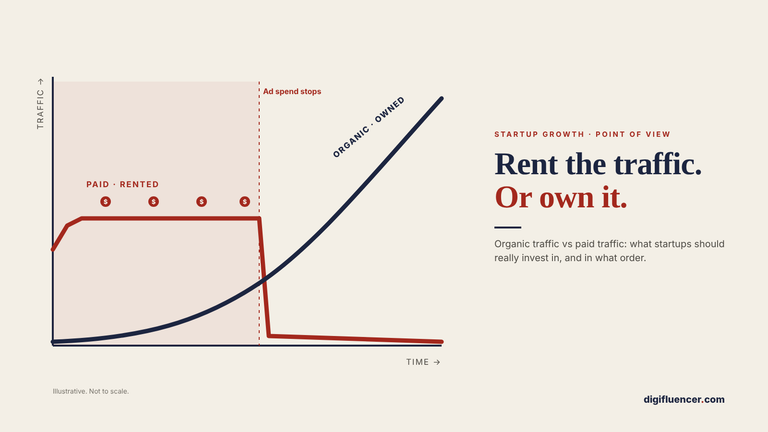
Paid advertising on Meta and Google remains the fastest way to scale an Australian fashion brand. It is also the fastest way to lose money if the four pillars above are weak. Advertising amplifies whatever the store already is.
What good looks like:
- Google Shopping and Performance Max built on a clean, well-titled product feed, so your products appear when Australians search with buying intent.
- Meta campaigns driven by creative. In today’s automated ad platforms, the creative is the targeting. Test new video and creator content every week, not every quarter.
- Accurate measurement. Server-side tracking and correctly configured analytics, so you know which channels actually make money after returns.
- A retention engine. Email and SMS flows for welcome, abandoned cart, browse abandonment, post-purchase, back in stock and win-back. Under Australia’s Spam Act 2003, every marketing email and SMS needs consent, clear sender identification and a working unsubscribe, so build the list properly from the start.
- Owned customer data. As platforms grow more expensive, your email list, SMS list and loyalty programme are the only audiences you own. Every first order should be the start of a relationship.
Quick win: check that your welcome, abandoned cart and post-purchase emails are live and have been reviewed in the past six months. In our experience, these three flows are the most commonly missing or broken.
Where Australian retailers win, and Shein cannot
Competing with global marketplaces on price is a losing strategy. Competing on everything else is not. Australian fashion retailers have real advantages, but most do not make them visible online.
| Your advantage | How to make it visible online |
|---|---|
| Speed of delivery | Show “order by 2pm for same-day dispatch” and delivery estimates by postcode on product pages. Offer Parcel Locker and click-and-collect: 32% of shoppers would switch retailers for out-of-home collection (Australia Post). |
| Easy, local returns | A clear, generous returns policy shown at the point of purchase, with an Australian returns address. |
| Fit for Australian bodies | Australian sizing, detailed fit notes, model measurements and reviews filtered by fit. |
| Season and climate | Collections timed for Australian seasons and occasions: Spring Racing, summer weddings, Christmas in summer, end of financial year. |
| Trust and accountability | An Australian ABN, phone number, real people, and returns handled under the Australian Consumer Law. |
| Quality, local and ethical stories | Specific, verifiable claims about where and how products are made, told through content. |
| Pre-loved and resale | 73% of Australians are interested in buying pre-loved goods directly from retailers, yet only 14% of businesses offer it (Australia Post). |
| Community | Styling events, local creators, loyalty perks and customer content that a global platform cannot replicate. |
The strategic principle is simple: do not try to be cheaper than Temu. Make it obvious, in every channel, why buying from you is better.
A 90-day plan for getting started
Not every pillar needs to be built at once. We recommend this sequence for Australian fashion retailers starting from a low base.
Days 1 to 30: fix the store.
Speed up product and collection pages on mobile. Put delivery estimates, the returns policy and size guidance on every product page. Simplify checkout and enable express wallets. Confirm analytics and conversion tracking are accurate. Make sure the essential email flows are live.
Days 31 to 60: get found.
Set up or clean up Google Merchant Center and free listings. Rewrite the top 20 collection and product pages around real Australian search terms. Add product, review and FAQ structured data. Publish a proper size and fit guide and an FAQ page. Run the AI-answer test and note where competitors appear and you do not.
Days 61 to 90: amplify.
Launch a weekly video content rhythm and recruit five to ten Australian micro-creators. Restart or restructure paid campaigns around the new creative and a clean product feed. Start an earned media and review programme to build the third-party mentions AI systems rely on.
Then: measure, refine and compound. Review results monthly against revenue, contribution margin after returns, and repeat purchase rate, not just traffic and followers.
A 15-minute self-assessment
Answer each question honestly. Score 2 for yes, 1 for partly and 0 for no.

| # | Pillar | Question | How to check |
|---|---|---|---|
| 1 | Store | Do your top product pages load in under three seconds on a phone? | PageSpeed Insights |
| 2 | Store | Does every product page show size guidance, delivery time and the returns policy? | Your phone |
| 3 | Store | Can a new customer check out in under a minute with an express wallet? | Buy from your own store |
| 4 | Search | Do you appear on page one for your three most important product searches in Australia? | Google, in a private window |
| 5 | Search | Are your products in Google Merchant Center with no feed errors? | Google Merchant Center |
| 6 | AI answers | When you ask ChatGPT or Gemini for brands like yours, is yours mentioned? | ChatGPT, Gemini, Perplexity |
| 7 | AI answers | Do you have product structured data and a clear FAQ and size guide? | Google Rich Results Test |
| 8 | Social | Can customers buy from your Instagram or Facebook posts in one or two taps? | Your Instagram profile |
| 9 | Social | Do you publish product video at least weekly, including creator content? | Your last 20 posts |
| 10 | Retention | Are welcome, abandoned cart and post-purchase emails live and compliant? | Your email platform |
How to read the result:
- 16 to 20: strong foundations. Your opportunity is optimisation and scale: better creative, stronger AEO and higher customer lifetime value.
- 10 to 15: you are likely losing a meaningful share of sales to better-organised competitors. Targeted fixes typically show results within a quarter.
- Under 10, or a zero on questions 1, 2 or 6: treat digital as an urgent commercial priority. These gaps affect every customer, every day, and the cost compounds while marketplaces keep growing.
Frequently asked questions
We’re a small label. Can we really compete with Shein and Temu?
Not on price, and you should not try. Australian independents win on fit, quality, speed, local trust and story. The challenge is not the product; it is making those strengths visible where Australians now discover and compare clothing. Small brands that do this well often outgrow larger competitors who have not.
Should we sell on marketplaces like The Iconic or Amazon Australia?
Often, yes, as part of the mix. Marketplaces account for 23% of Australian online spend (Australia Post) and can bring new customers. But they come with commission, less control over the brand and no ownership of the customer. We recommend treating marketplaces as a customer acquisition channel that feeds your own store, not a replacement for it.
What is AEO, and is it different from SEO?
Answer engine optimisation is about being cited or recommended in AI-generated answers, from ChatGPT and Perplexity to Google’s AI Overviews and AI Mode. It builds on good SEO, but places more weight on structured data, direct answers to questions, consistent brand information and mentions on trusted third-party sites. For fashion, it determines whether your brand is named when someone asks an AI where to buy.
Do we need a new website?
Usually not. Most of the gains come from improving speed, product pages, checkout, structured data and content on the platform you already have. A rebuild is worth considering when the platform cannot support features you need, such as fast mobile performance, product feeds, loyalty or proper integrations, or when the cost of working around it exceeds the cost of replacing it.
How long before we see results?
Store and checkout improvements often show results within weeks. Paid media can scale quickly once the store converts well. SEO and AEO typically build over three to nine months, and then continue to compound, which is why the best time to start them is before you need them.
How much should we invest in digital marketing?
It depends on margins, growth targets and how much of your revenue comes online. Rather than a fixed figure, we recommend starting with the foundations (pillars 1 to 3), which make every later advertising dollar more efficient, then scaling paid media against measured contribution margin, not revenue alone.
Conclusion: the shopfront has moved
For a generation, Australian fashion retailers fought for the best location on the high street. The equivalent location today is the first product in a Google Shopping result, the brand an AI names when asked for a recommendation, and the label whose video a shopper stops scrolling for.
The overseas marketplaces have understood this, invested accordingly, and are growing faster than Australian fashion online as a result. They are not unbeatable. Australian retailers have advantages that no global platform can copy. But those advantages only win sales when customers can see them.
The first step is simply to find out where you stand.
Digifluencer helps Australian retailers turn their online stores into dependable engines of growth. Our design, growth and engineering teams work together across the website, search, AI visibility, social and paid media, so that every channel pulls in the same direction.
If the self-assessment scored lower than you would like, our Australian Fashion Growth Audit reviews your store against all five pillars. We test your website speed and checkout, benchmark your search and AI-answer visibility against three Australian competitors of your choice, review your social and paid channels, and give you a prioritised 90-day action plan. There is no obligation, and you keep the findings whatever you decide.
The audit is complimentary and available to Australian-based fashion, apparel, footwear and accessories retailers only.
Book your Australian Fashion Growth Audit →
Sources
- Australia Post, eCommerce Report 2026 (covering calendar year 2025), “7 eCommerce trends you can’t ignore.” https://auspost.com.au/business/business-ideas/selling-online/ecommerce-trends
- Australia Post, Annual eCommerce Report 2026, fashion and apparel figures, as reported by Ragtrader. https://www.ragtrader.com.au/news/online-fashion-spending-hits-11-6b-in-2025
- Australia Post, Quarterly eCommerce Report, Q2 2026, as reported by Ragtrader, 30 July 2026. https://www.ragtrader.com.au/news/online-fashion-spending-sees-slowest-growth-in-q2
- Roy Morgan Single Source, “Amazon, Temu and Shein growth story continues,” March 2026 (n=64,960 Australians aged 14+, January 2024 to December 2025). https://www.roymorgan.com/findings/10158-amazon-temu-and-shein-growth-story-continues-march-2026
- Roy Morgan data as reported by Ragtrader, August 2024 (Shein and Temu shopper demographics). https://www.ragtrader.com.au/news/extraordinary-shein-and-temu-near-3b-market-share-in-australia
- The Nightly, “Fast-fashion powerhouse Shein’s surging Australian sales top $1 billion,” April 2025 (Shein Distribution Australia regulatory filings). https://thenightly.com.au/business/fast-fashion-powerhouse-sheins-surging-australian-sales-top-1-billion–c-18448115
- Omnisend, survey of 1,027 Australian consumers conducted by Cint, July 2025. https://www.omnisend.com/latest-news/over-half-of-aussies-now-use-gen-ai-tools-for-online-shopping-27-say-chatgpt-beats-google-for-product-research/
- The Navigators, AI Brandscape 2026 (n=1,736 Australian consumers), as reported by Inside Retail, March 2026. https://insideretail.com.au/digital/ai-begins-shaping-retail-purchasing-decisions-for-australians-report-finds-202603
- Pickr, “Google’s AI Mode goes live in Australia,” October 2025. https://www.pickr.com.au/news/2025/googles-ai-mode-goes-live-in-australia/
- Ahrefs, “Update: AI Overviews Reduce Clicks by 58%,” February 2026. https://ahrefs.com/blog/ai-overviews-reduce-clicks-update/
- Google, 55 and Deloitte, “Milliseconds Make Millions,” published on web.dev. https://web.dev/case-studies/milliseconds-make-millions
- PYMNTS Intelligence and Visa Acceptance Solutions, The 2025 Global Digital Shopping Index: Australian Edition, July 2025. https://www.pymnts.com/shopping/2025/shoppers-down-under-lead-the-world-in-mobile-first-shopping/
- ContentGrip, “TikTok Shop is booming globally, but Australia is still waiting,” March 2026. https://www.contentgrip.com/tiktok-shop-australia-delay/
- Shopappy, report on TikTok Shop’s planned Q1 2027 markets, August 2026. https://shopappy.com/ecommerce/tiktok-shop/tiktok-shop-q1-2027-three-markets